
JOANNEUM RESEARCH MATERIALS, together with DIH SÜD and ACstyria, delivered a practical training programme demonstrating how Design for Additive Manufacturing and advanced quality assurance methods developed within WAVETAILOR are helping engineers unlock the full potential of metal 3D printing.
As additive manufacturing continues to transform modern manufacturing, engineers need more than access to advanced technologies—they need the skills to design specifically for them. To help bridge this gap, JOANNEUM RESEARCH MATERIALS (JOA), a partner in the WAVETAILOR project, recently delivered a three-part industry training programme on “New Design Freedoms through Metal 3D Printing for Designers”, in collaboration with DIH SÜD GmbH and ACstyria Mobility Cluster.
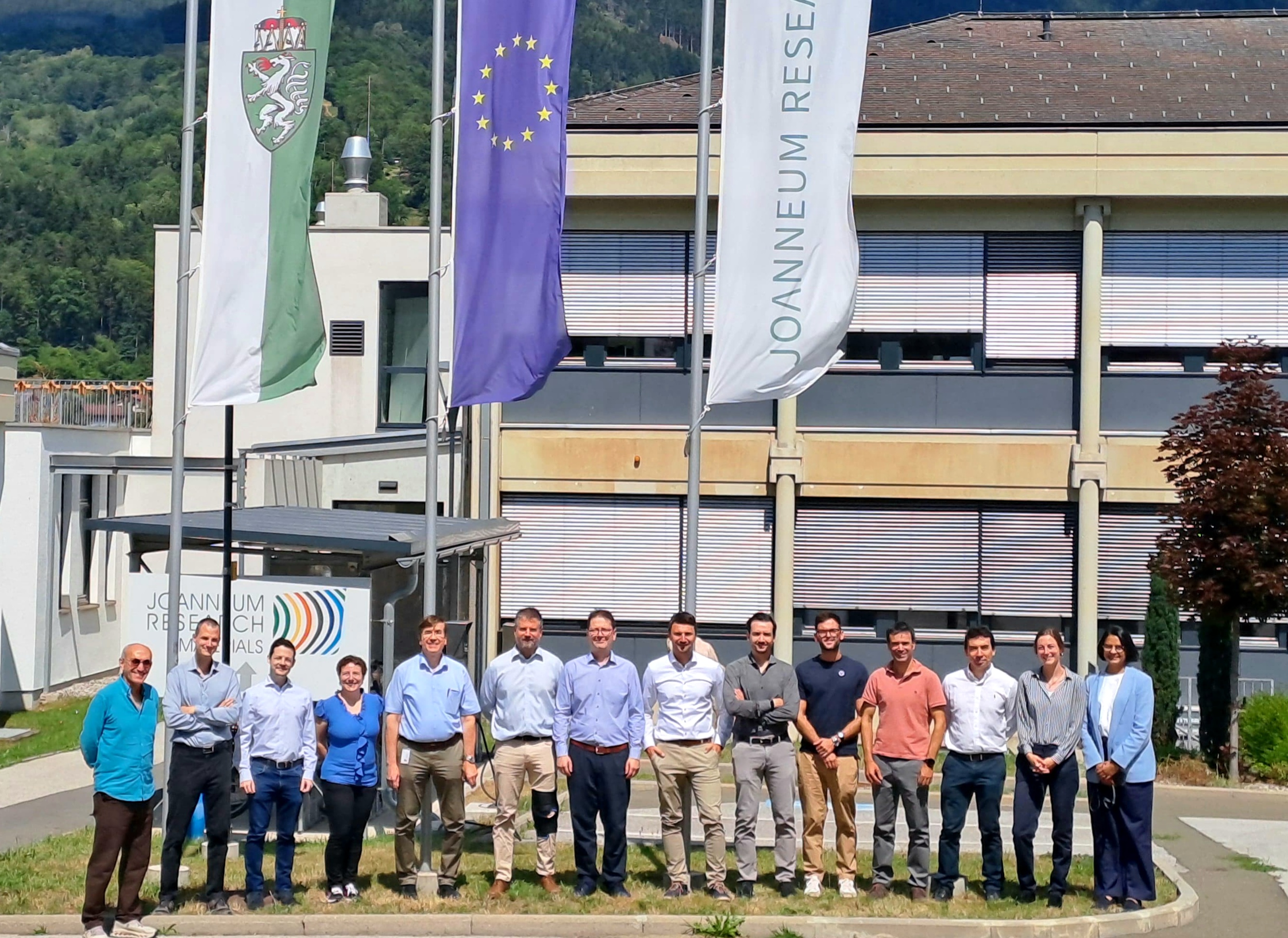
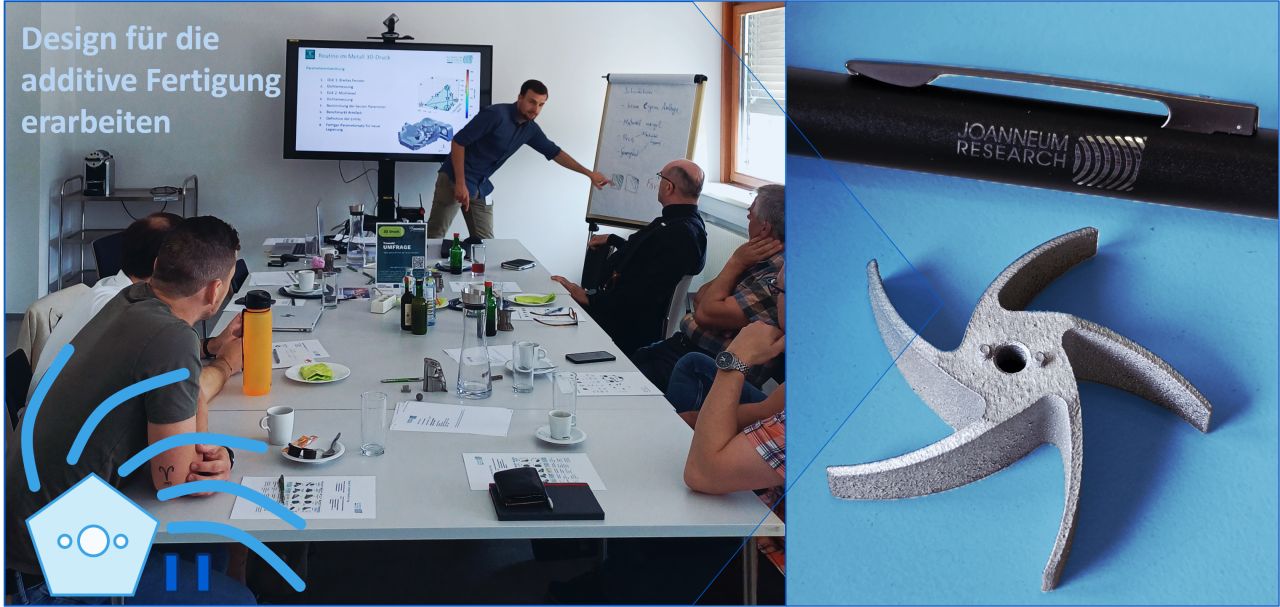
The three-part training programme took place on 9, 16 and 23 June, combining a hands-on workshop at JOANNEUM RESEARCH MATERIALS in Niklasdorf with two interactive online training sessions. This blended format enabled participants to gain first-hand experience of the complete metal additive manufacturing process while applying Design for Additive Manufacturing (DfAM) principles to a real industrial case study.
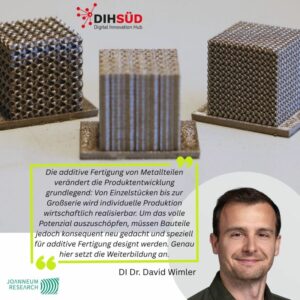
Led by David Wimler, the training equipped engineers with practical knowledge of Design for Additive Manufacturing (DfAM) and demonstrated how metal additive manufacturing can unlock new possibilities for product development, lightweight design, and functional integration.
From Theory to Industrial Practice
The programme brought together seven participants from five different companies and combined an on-site workshop with two interactive online sessions.
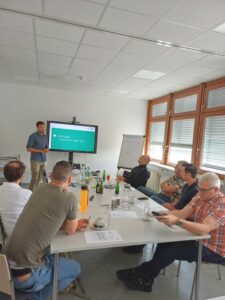
The first session, hosted at JOANNEUM RESEARCH MATERIALS in Niklasdorf, Austria, introduced participants to the fundamentals of Laser Powder Bed Fusion (LPBF), one of the leading technologies for metal additive manufacturing. Participants explored:
- The complete LPBF process chain
- Materials and common metal alloys
- Design rules and manufacturing constraints
- Opportunities for weight reduction, part consolidation and functional integration
- Quality assurance approaches for metal additively manufactured components
A guided tour of JOANNEUM RESEARCH’s additive manufacturing facilities gave attendees first-hand insight into industrial production and quality control processes.
Learning Through a Real Engineering Challenge
The two follow-up online workshops focused on applying DfAM principles to a real industrial use case. Participants worked collaboratively using specialised design software to redesign an existing mechanical assembly for additive manufacturing.
The outcome demonstrated the true potential of DfAM:
- Eight conventionally manufactured components (sheet metal, machined and turned parts) were successfully consolidated into a single additively manufactured component.
- The redesigned part was produced during the training itself, illustrating how additive manufacturing can significantly shorten development cycles while reducing assembly complexity.
WAVETAILOR Technologies in Action
An important highlight of the training was the integration of technologies developed within the WAVETAILOR project. Participants were introduced to advanced quality assurance methods for metal additive manufacturing, demonstrating how research developed within Horizon Europe projects can directly support industrial adoption.
By combining practical design training with cutting-edge manufacturing and inspection technologies, the course showcased how European research can accelerate the uptake of advanced manufacturing across industry.
Building Skills for the Future of Manufacturing
As David Wimler explains:
“The additive manufacturing of metal parts is fundamentally changing product development. To fully exploit its potential, components must be fundamentally rethought and specifically designed for additive manufacturing. This is exactly where targeted training becomes essential.”
The strong engagement from participants and the successful completion of the programme highlight the growing demand for practical training in additive manufacturing. With another edition already planned for next year, initiatives like this play an important role in strengthening Europe’s advanced manufacturing workforce and supporting the wider adoption of innovative production technologies.
Through activities such as these, WAVETAILOR continues to demonstrate that innovation is not only about developing new technologies, but also about equipping engineers and companies with the knowledge and skills needed to successfully implement them in real-world manufacturing environments.
You can visit our website and learn more about the technologies we are developing and why they are crucial for a sustainable future in Europe 👉 https://wavetailor.eu/